
Premium Quality
Refrigeration Equipment

Partner no.1
Inverter Condensing Units – Energy Savings of Up to 60%
Inverter Condensing Units – An Energy-Efficient Solution for Modern Commercial Refrigeration
Frigo Zika has developed OPTI-MAX inverter condensing units for professional refrigeration systems, with the aim of providing precise refrigeration capacity control, reliable operation and more efficient energy management. OPTI-MAX inverter condensing units can be integrated into various solutions for cold rooms and other professional refrigeration applications, with the appropriate model selected according to the required temperature, refrigeration capacity and operating conditions.
In modern commercial refrigeration systems, where energy efficiency, reliable operation and precise temperature control have a direct impact on operating costs, inverter refrigeration units represent one of the more advanced solutions for supermarkets, retail facilities, cold rooms, professional refrigerated display cases and other systems that require continuous and stable operation.
Unlike conventional ON/OFF refrigeration systems, where the compressor operates by switching on and off, inverter technology enables the compressor capacity to be adjusted according to the actual refrigeration load. This allows the system to maintain the set temperature more precisely, reduce unnecessary compressor starts and achieve more efficient operation during periods when maximum refrigeration capacity is not required.
For professional cold rooms, selecting the right complete system is particularly important from the capacity of the refrigeration unit and compressor type, through the condensing unit and evaporator, to the appropriate control system and operating parameters. A well-designed refrigeration system ensures reliable operation, stable temperature control and optimal energy use according to the specific operating conditions.
Frigo Zika is not focused solely on supplying individual refrigeration units, but also on designing and implementing professional refrigeration systems according to the specific requirements of each facility. Therefore, when selecting an inverter refrigeration unit, the nominal capacity is not the only factor considered, the complete system and its actual operating conditions are taken into account.
What Are Inverter Condensing Units?
What Are Inverter Condensing Units?
An inverter condensing unit is an advanced refrigeration unit that uses inverter technology to control the operating speed of the compressor.
In conventional refrigeration units, the compressor operates according to the following principle:
- It starts at 100% capacity
- It reaches the set temperature
- It switches off
- It starts again when the temperature rises
This operating method causes frequent start-stop cycles, increased electricity consumption, temperature fluctuations and additional stress on the compressor.
In contrast, inverter condensing units continuously adjust the compressor speed and deliver exactly the required cooling capacity at any given moment.
This means that the system can operate at:
- 30% capacity
- 50% capacity
- 70% capacity
- 100% capacity
This adaptive capability is precisely what delivers the greatest energy savings and ensures stable refrigeration system operation.
| Inverter Model | Variable Cooling Capacity (kW) at -10/45°C |
|---|---|
| OPTIM-MAX 3 | 2.03 - 6.08 |
| OPTIM-MAX 4 | 2.75 - 8.20 |
| OPTIM-MAX 7 | 4.71 - 14.16 |
| OPTIM-MAX 10 | 5.87 - 18.05 |
How Does Inverter Technology Work in Refrigeration Systems?
The inverter controls the power supply frequency of the compressor motor. By changing the frequency, the compressor speed is adjusted, which directly affects the cooling capacity of the system.
When the load is low, during night operation or periods with fewer customers, the condensing unit automatically reduces its capacity and consumes significantly less energy.
When the cooling demand increases due to more frequent opening of refrigerated cabinets, increased product turnover or higher outdoor temperatures, the system automatically increases its capacity.
This adaptive regulation enables maximum efficiency throughout the entire day.
Advantages of Inverter Condensing Units
1. Over 60% Energy Savings
The greatest advantage of inverter technology is significant reduction in electricity consumption.
Under real operating conditions, modern inverter condensing units can achieve energy savings of more than 60% compared to traditional ON/OFF systems.
This is particularly noticeable in:
- supermarkets
- mini markets
- discount stores
- butcher shops
- bakery chains
- cold storage facilities
- cold rooms
2. Stable Temperature in Refrigerated Cabinets and Cold Rooms
One of the biggest challenges with conventional systems is temperature fluctuation.
Inverter condensing units maintain an almost constant temperature in refrigerated display cabinets, which directly contributes to:
- product quality
- longer shelf life
- food safety
- reduced temperature fluctuations
3. Extended Equipment Lifetime
Frequent compressor start-stop cycles represent the greatest stress factor for any refrigeration system.
Since an inverter compressor operates continuously while adjusting its speed according to demand, mechanical stress on the system is significantly reduced.
The result is:
- longer compressor operating life
- fewer breakdowns
- lower service costs
- increased system reliability
4. Quieter System Operation
Since the compressor operates at reduced capacity most of the time, noise levels are significantly lower compared to standard condensing units.
This is particularly important for retail facilities in urban areas and supermarkets operating 24 hours a day.
5. Reduced Load on the Electrical Grid
Conventional condensing units draw a high starting current every time the compressor starts.
Inverter technology enables a so-called “soft start”, meaning gradual compressor start-up without sudden loads on the electrical installation.
Opti-Max Inverter Condensing Units
Opti-Max series represents a new generation of professional inverter condensing units developed for commercial refrigeration applications.
The systems are designed for maximum energy efficiency, reliability and long-term cost effectiveness.
Opti-Max 3
- 3 HP
- Sanyo inverter compressor
- MBP and LBP applications
- R404A, R455A, R448A, R449A
- Evaporation range from -35°C to 0°C
Opti-Max 4
- 4 HP
- Sanyo inverter compressor
- 380V power supply
- MBP and LBP applications
- Operation at ambient temperatures up to +43°C
Opti-Max 7
- 7 HP
- Hitachi inverter compressor
- High energy efficiency
- Advanced operating control
Opti-Max 10
- 10 HP
- Hitachi inverter compressor
- High cooling capacity
- Ideal for larger systems and supermarkets
- OPTI-MAX 3
- OPTI-MAX 4
- OPTI-MAX 7
- OPTI-MAX 10
OPTI-MAX 3
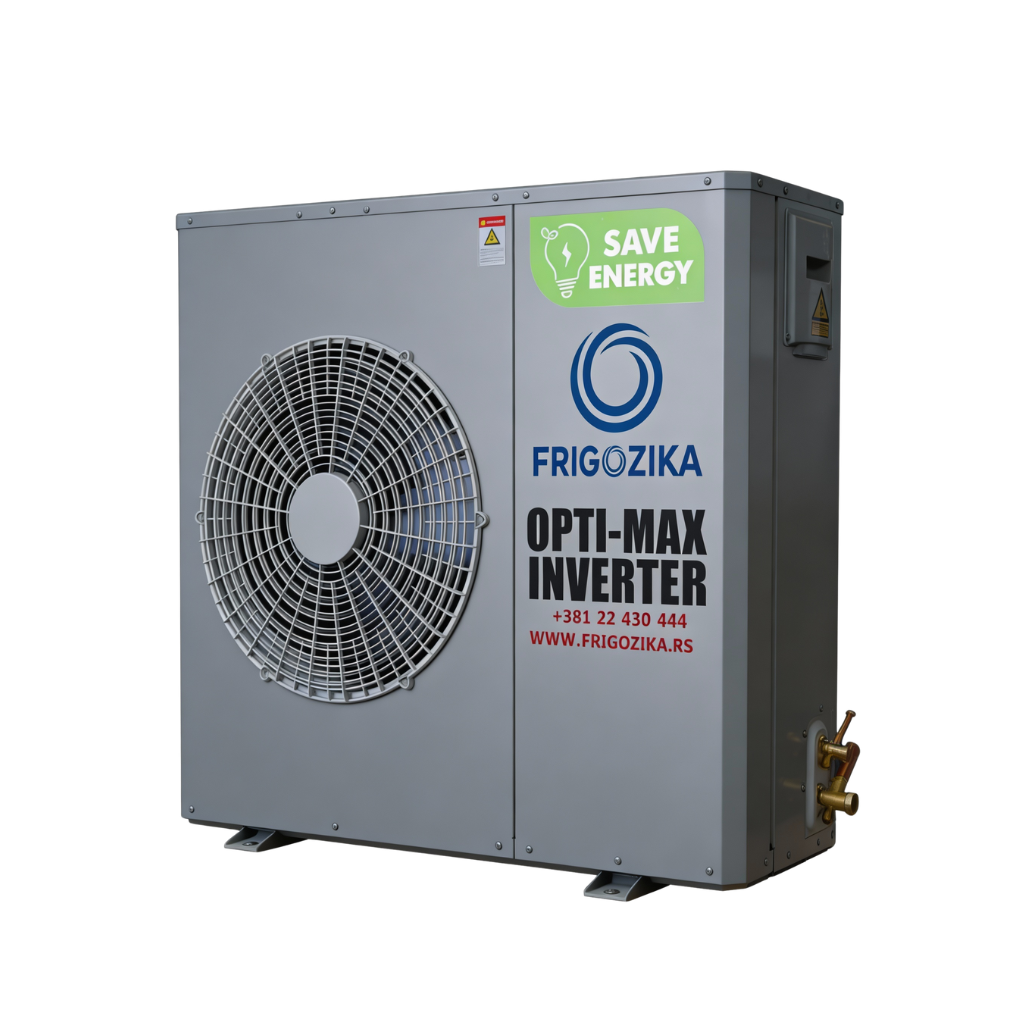
OPTI-MAX 3
- Refrigerant: R404A, R455A, R448A, R449A
- Power Supply: 220V~240V/50HZ or 220V/60HZ
- Evaporating Temperature: -35 to 0°C
- Power: 3 HP
- Application: MBP and LBP
- Compressor: Sanyo Inverter Refrigeration Compressor
- Ambient Temperature: -7 to 43 °C
- Dimensions (mm): Length 1000 | Width 420 | Height 822
- Weight (kg): 78
OPTI-MAX 4
OPTI-MAX 4
- Refrigerant:
R404A, R455A, R448A, R449A - Power Supply: 380V/50HZ 3PH or 380V/60HZ
- Evaporating Temperature: -35 to 0°C
- Power: 4 HP
- Application: MBP and LBP
- Compressor: Sanyo Inverter Refrigeration Compressor
- Ambient Temperature: -7 to 43 °C
- Dimensions (mm): Length 1060 | Width 420 | Height 920
- Weight (kg): 93
OPTI-MAX 7
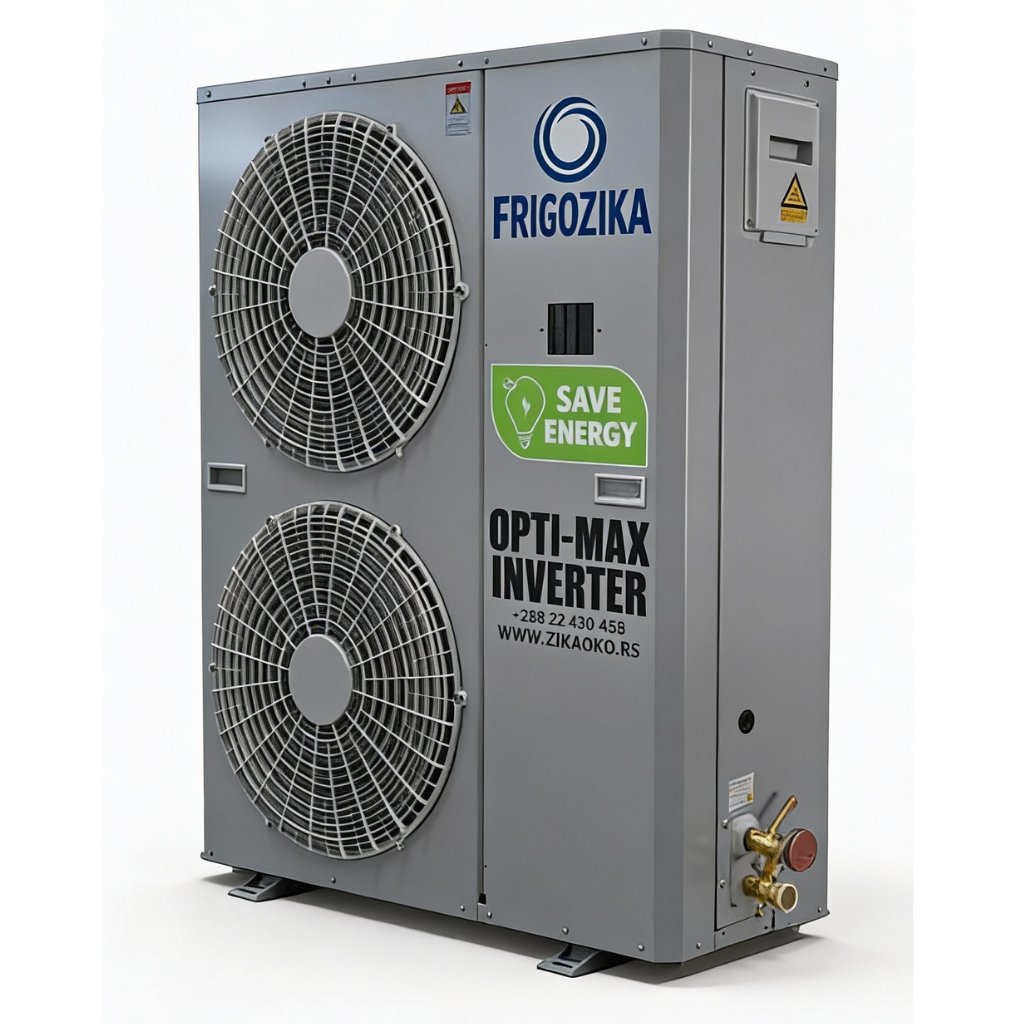
OPTI-MAX 7
- Refrigerant: R404A, R455A, R448A, R449A
- Power Supply: 380V/50HZ 3PH or 380V/60HZ
- Evaporating Temperature: -35 to 0°C
- Power: 7 HP
- Application: MBP and LBP
- Compressor: Hitachi Inverter Refrigeration Compressor
- Ambient Temperature: -7 to 43 °C
- Dimensions (mm): Length 1010 | Width 440 | Height 1220
- Weight (kg): 121
OPTI-MAX 10
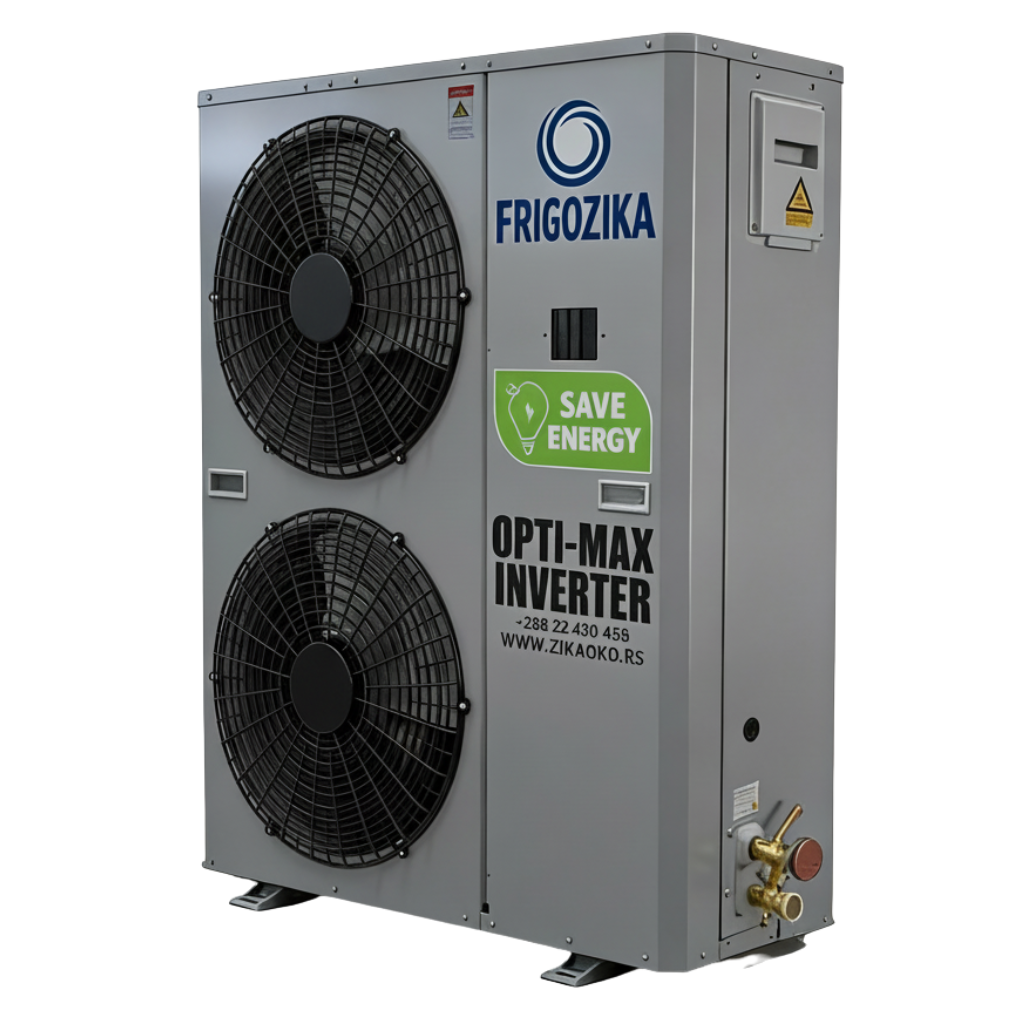
OPTI-MAX 10
- Refrigerant: R404A, R455A, R448A, R449A
- Power Supply: 380V/50HZ 3PH or 380V/60HZ
- Evaporating Temperature: -35 to 0°C
- Power: 10 HP
- Application: MBP and LBP
- Compressor: Hitachi Inverter Refrigeration Compressor
- Ambient Temperature: -7 to 43 °C
- Dimensions (mm): Length 1180 | Width 480 | Height 1545
- Weight (kg): 172
- OPTI-MAX 3
- OPTI-MAX 4
- OPTI-MAX 7
- OPTI-MAX 10
OPTI-MAX 3
OPTI-MAX 3
- Refrigerant: R404A, R455A, R448A, R449A
- Power Supply: 220V~240V/50HZ or 220V/60HZ
- Evaporating Temperature: -35 to 0°C
- Power: 3 HP
- Application: MBP and LBP
- Compressor: Sanyo Inverter Refrigeration Compressor
- Ambient Temperature: -7 to 43 °C
- Dimensions (mm): Length 1000 | Width 420 | Height 822
- Weight (kg): 78
OPTI-MAX 4
OPTI-MAX 4
- Refrigerant:
R404A, R455A, R448A, R449A - Power Supply: 380V/50HZ 3PH or 380V/60HZ
- Evaporating Temperature: -35 to 0°C
- Power: 4 HP
- Application: MBP and LBP
- Compressor: Sanyo Inverter Refrigeration Compressor
- Ambient Temperature: -7 to 43 °C
- Dimensions (mm): Length 1060 | Width 420 | Height 920
- Weight (kg): 93
OPTI-MAX 7
OPTI-MAX 7
- Refrigerant: R404A, R455A, R448A, R449A
- Power Supply: 380V/50HZ 3PH or 380V/60HZ
- Evaporating Temperature: -35 to 0°C
- Power: 7 HP
- Application: MBP and LBP
- Compressor: Hitachi Inverter Refrigeration Compressor
- Ambient Temperature: -7 to 43 °C
- Dimensions (mm): Length 1010 | Width 440 | Height 1220
- Weight (kg): 121
OPTI-MAX 10
OPTI-MAX 10
- Refrigerant: R404A, R455A, R448A, R449A
- Power Supply: 380V/50HZ 3PH or 380V/60HZ
- Evaporating Temperature: -35 to 0°C
- Power: 10 HP
- Application: MBP and LBP
- Compressor: Hitachi Inverter Refrigeration Compressor
- Ambient Temperature: -7 to 43 °C
- Dimensions (mm): Length 1180 | Width 480 | Height 1545
- Weight (kg): 172

Applications of Inverter Condensing Units in Supermarkets
Supermarkets are an ideal environment for applying inverter technology because the refrigeration load continuously changes throughout the day.
For example:
- morning period
- peak shopping hours
- evening operation
- night mode
Conventional systems cannot efficiently adapt to these changes, while inverter condensing units automatically adjust their capacity according to the requirements of the facility.
MBP and LBP Applications
MBP – Medium Back Pressure
Used for medium-temperature refrigeration applications:
- dairy products
- beverages
- delicatessen products
- fresh food products
LBP – Low Back Pressure
Used for low-temperature refrigeration systems:
- freezers
- frozen goods
- cold storage facilities
- industrial refrigeration
Environmental Benefits of Inverter Technology
Modern refrigeration systems must meet strict environmental standards.
Inverter condensing units contribute to:
- lower energy consumption
- reduced CO₂ emissions
- higher energy efficiency of the facility
- compliance with EU standards
Thanks to their compatibility with next-generation refrigerants such as R455A, R448A and R449A, inverter systems represent a long-term sustainable solution for the future of commercial refrigeration.
60%+
Energy savings
Opti-Max Inverter Technology
Return on Investment (ROI)
Although the initial investment may be slightly higher compared to standard condensing units, inverter technology enables significant reductions in electricity consumption and faster return on investment.
In supermarkets, cold rooms and facilities operating 24/7, the investment is often recovered through lower electricity bills, reduced maintenance costs and extended equipment lifetime.
✓ Energy savings of over 60%
✓ Lower maintenance costs
✓ Extended equipment lifetime
Why Choose Frigo Zika Inverter Condensing Units?
- Proven energy efficiency
- Energy savings of over 60%
- Sanyo and Hitachi inverter compressors
- Compatibility with modern refrigerants
- Reliable operation in all climate conditions
- Integration with central monitoring systems
- Lower maintenance costs
- Extended equipment lifetime
Inverter condensing units represent the future of commercial refrigeration. Their ability to intelligently adjust compressor operation according to the actual needs of the system enables significant energy savings, more stable operation of refrigerated cabinets and cold rooms, extended equipment lifetime and lower operating costs.
If you are looking for maximum energy efficiency, reliability and long-term cost effectiveness, Opti-Max inverter condensing units from Frigo Zika represent the ideal solution for modern supermarkets, retail chains and professional refrigeration systems.
Contact the Frigo Zika team and find an inverter condensing unit tailored to the requirements of your facility.
FREQUENTLY ASKED QUESTIONS
Frequently asked questions about inverter refrigeration units
From selecting an inverter refrigeration unit and condensing unit to the design, installation and maintenance of cold rooms — answers to the most important questions before choosing a professional refrigeration system.
An inverter refrigeration unit is a professional refrigeration system that uses an inverter compressor to adjust cooling capacity according to the current requirements of the cold room. Unlike conventional ON/OFF systems, which generally operate by switching the compressor on and off, inverter technology enables more continuous capacity control and more stable temperature management inside the cold room.
A condensing unit is a component of a refrigeration system that combines the key components required to generate refrigeration capacity, including the compressor, condenser, fans, control system and appropriate safety components. It operates together with the evaporator in the cold room, and the correct selection of a condensing unit depends on the room temperature, dimensions, insulation, type of goods and required refrigeration capacity.
A conventional refrigeration unit typically operates by switching the compressor on and off, while an inverter unit adjusts the compressor speed according to the current load. As a result, inverter systems can provide more precise temperature control, reduce operating fluctuations and adapt more efficiently to changing refrigeration requirements.
OPTI-MAX is a range of inverter refrigeration units developed by Frigo Zika for professional refrigeration systems and cold rooms. OPTI-MAX units use inverter technology to adjust refrigeration capacity according to the actual system load. When selecting the appropriate model, factors such as evaporating temperature, condensing temperature and required refrigeration capacity need to be taken into account.
Inverter refrigeration units can be used for various professional cold rooms, including rooms for storing food, beverages, fruit and vegetables, meat products, dairy products and other goods. The appropriate system is selected according to the required temperature, room volume, type of goods, frequency of door opening and other thermal loads.
Yes, inverter refrigeration systems can be designed for low-temperature cold rooms and freezing applications, but the specific unit selection depends on the required room temperature and evaporating temperature. For a cold room operating at -18 °C, it is not sufficient to consider only the air temperature inside the room — the complete system must be properly designed, including the refrigeration unit, evaporator, refrigerant piping and control system.
The refrigeration capacity is not selected based solely on the volume of the cold room. Factors such as the room dimensions and insulation, desired temperature, ambient temperature, type and quantity of goods, product temperature at loading, frequency of door opening, lighting and other internal and external thermal loads must also be considered. Therefore, for a professional cold room, it is recommended to calculate the required refrigeration capacity before selecting the refrigeration unit.
An inverter system can achieve lower electricity consumption compared with a conventional ON/OFF system when the cold room does not require maximum refrigeration capacity for most of its operating time. Instead of frequently switching on and off, the inverter compressor can reduce or increase its output according to the current load. Actual energy savings depend on the operating conditions, temperature, load and correct system sizing.
The choice of refrigerant depends on the specific unit model, operating temperature and project requirements. Professional condensing units may be available for different refrigerants, and when selecting a new system, it is important to consider energy efficiency, service availability, applicable regulatory requirements and the environmental impact of the refrigerant.
Yes. Frigo Zika manufactures professional inverter refrigeration units, including the OPTI-MAX range, as well as other solutions for professional refrigeration systems. In addition to the refrigeration units themselves, complete refrigeration systems can be designed according to the specific requirements of each cold room.
Yes. Frigo Zika specialises in the design and manufacture of professional refrigeration systems, allowing the refrigeration unit, condensing unit, evaporator, control system and other components to be coordinated with the specific cold room. This approach enables the system to be sized according to the actual requirements of the facility rather than selecting a refrigeration unit based solely on its nominal capacity.
The choice depends on how the cold room is used. An inverter condensing unit is particularly suitable when the refrigeration load changes frequently, stable temperature control is required and the system does not operate at maximum capacity for most of the time. For simpler installations with relatively constant loads, a conventional solution may also be an appropriate choice.
Yes, professional refrigeration units are designed to operate within a specified range of ambient temperatures. However, high ambient temperatures directly affect condenser operating conditions and the available refrigeration capacity. Therefore, when selecting a unit, its performance at the projected maximum ambient temperature should be checked rather than relying only on the nominal capacity stated in the catalogue.
Yes, an inverter refrigeration unit can be part of a new cold room system, but in certain cases it can also be used to modernise an existing installation. When replacing an existing refrigeration unit, the evaporator, refrigerant, piping, control system and required capacity should be checked to ensure that all system components are compatible.
The service life of a professional refrigeration unit depends on the quality of the equipment, correct sizing, operating conditions and regular maintenance. A properly selected and regularly serviced system can operate reliably for many years in professional applications. It is particularly important to maintain the condenser and check operating pressures, electrical components, fans and the overall condition of the refrigeration system.
To select the appropriate OPTI-MAX inverter refrigeration unit, it is necessary to provide the cold room dimensions, desired temperature, intended use of the room, type and quantity of goods, approximate product temperature at loading and information about the operating conditions. Based on this information, Frigo Zika can recommend the appropriate refrigeration capacity and configuration of the complete system.
Yes. In addition to manufacturing and designing refrigeration equipment, Frigo Zika organises the delivery and installation of systems according to the agreed project. Proper installation is an important part of refrigeration system performance, as it affects reliability, energy efficiency and the long-term operation of the refrigeration unit.
Contact
📞 Phone: +381 22 430 444
🖂 Email: info@frigozika.rs
⏱ Working hours: Mon–Sun 08:00–16:00
🏢 Address: Kraljevacka bb, Ruma, Srbija
Need help?
Write to us
Frigo Zika © 2026. All Rights Reserved.
Made with ❤️ mydigitalstudio.website